CURRICULUM VITAE


Dr.  Ping Zhang


Address:       Department of Cellular and Molecular Physiology

                     Yale University, School of Medicine

                     333 Cedar Street

                     New Haven, CT 06520

E-mail:          ping.zhang@yale.edu

Telephone:   (203) 785-5892

Facsimile:     (203) 785-4951

Residency:    Permanent Resident in the United States of America


Education       


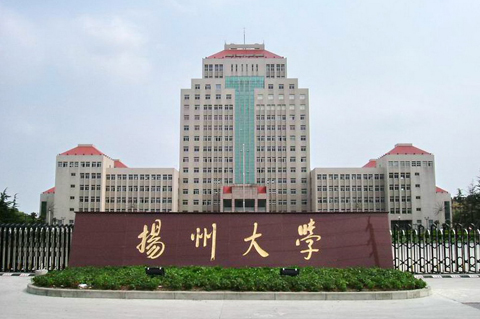
            Ph. D. 1993: Department of Life Sciences, The University of Tokyo, Japan

             Advisor: Dr. Issei Mabuchi, Dr. Shoshi Muto

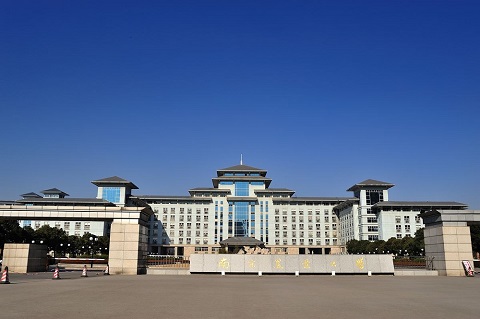
            Ph. D. 1988: Department of Biology, Beijing Agricultural University.

            Advisor: Dr. Chenghou Lou

            M. S.   1985: Department of Biology, Beijing Agricultural University.

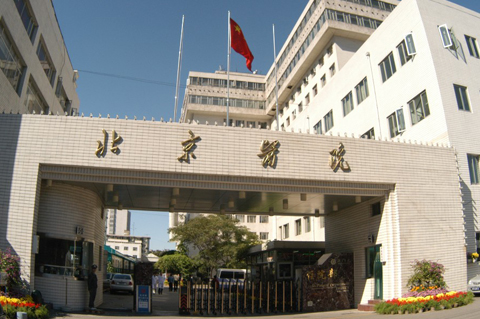
            B. S.   1983: Department of Biology, Beijing Normal University.


Research


Sept. 1996 - Present:

Associate Research Scientist

Department of Cellular and Molecular Physiology, Yale University School of Medicine. Patch clamping study of calcium-activated potassium channel in neuron, epithelial sodium channels expressed in Oocytes, acid sensitive ion channels in neurons from mice, toad fish and squids.


Mar. 1995 - Aug. 1996:

Research Associate

Department of Urology, Albert Einstein College of Medicine. Patch clamping study of calcium-activated potassium channel in smooth muscle cells.  Discovered a autorhythmicity at single channel protein molecular level.


Apr. 1993 - Mar. 1995:

Postdoctoral Fellow

Laboratory of Plant Molecular Biology, The Rockefeller University. Set up a patch clamp system. Recorded rhythmic excitation in Arabidopsis and its hy1, hy2, hy6, phyB, phyA, hy4, hy5, fhy1, fhy3 mutants. Applied microinjection technique to Arabidopsis cells.


Mar. 1990 - Mar. 1993:

Graduate research assistant

Institute of Molecular and Cellular Biosciences and Department of Life Sciences, The University of Tokyo. Applied patch clamp techniques and biochemistry methods to investigations of cell signal transduction pathway. Established a unique way to record calcium channels. Identified K+, Cl- and Ca2+ channels in the vacuolar membrane of tobacco cell suspension culture. Recorded single calcium channel in the plasma membrane and vacuolar membrane of Arabidopsis thaliana for the first time.


Oct. 1988 - Mar. 1990:

Graduate research assistant

Department of Biology, Faculty of Science, The University of Tokyo.

Discovered a new way of cell-to-cell communication in giant Chara corallina cells and demonstrated that traveling electrical field mediated the communication.


Sept. 1983 - Sept. 1988:

Graduate research assistant

Department of Biology, Beijing Agricultural University.

Developed a new method to investigate the action potential in plant cells and discovered dim light induced heart beating like rhythmic excitation in watercress and other plants from 13 species.


Academic Awards/ Scholarships


1999 ¨C2001 American Heart Association Postdoctoral Fellowship.


1990¨C1993 Scholarship awarded: Mambusho Scholarship from the Ministry of    

                  Education, Culture and Science, Japan.


1988-1989 Scholarship awarded: Mambusho Scholarship from the Ministry of Education, Culture and Science, Japan.


Professional Societies


1. The New York Academy of Sciences

2. American Association for the Advancement of Science


Refereed Publications

Ping Zhang, Fred J. Sigworth and Cecilia M. Canessa (2005) Gating of acid-sensitive ion channel-1: release of Ca2+-block vs. allosteric mechanism. J. Gen. Physiol (submitted).

Tatjana Coric, Ping Zhang, Natasa Todorovic, and Cecilia M. Canessa (2003) The Extracellular domain determines the kinetics of desensitization in acid-sensitive ion channel 1. J. Biol. Chem. 278: 45240-45247.

Ping Zhang and Cecilia M. Canessa (2002) Single channel properties of rat recombinant acid-sensitive ion channle-1a, -2a and ¨C3 expressed in Xenopus oocytes. J. Gen. Physiol. 120: 553-566.

Diego Alvarez de la Rosa, Ping Zhang, Deren Shao, Fletcher White, and Cecilia Canessa (2002) Functional implications of the localization and activity of acid-sensitive channels in rat peripheral nervous system. PNAS 99:2326-2331.

Ping Zhang and Cecilia M. Canessa (2001) Single-channel properties of recombinant acid-sensitive ion channels formed by the subunits asic2 and asic3 from dorsal root ganglion neurons expressed in Xenopus oocytes J. Gen. Physiol. 117: 563-572.


Diego Alvarez de la Rosa, Cecilia M. Canessa, Gregor K. Fyfe, and Ping Zhang (2000) Structure and regulation of amiloride-sensitive sodium channels. Annu. Rev. Physiol. 62:573-594.


Ping Zhang, Gregor K. Fyfe, Irina I. Grichtchenko, and Cecilia M. Canessa (1999) Inhibition of ab epithelial sodium channels by external protons indicates that the second hydrophobic domain contains structural elements for closing the pore. Biophysical Journal. 77:3043-3051.


Gregor K. Fyfe, Ping Zhang, and Cecilia M. Canessa (1999) The second hydrophobic domain contributes to the kinetic properties of epithelial sodium channels. J. Biol. Chem. 274:36415-36421.


Diego Alvarez de la Rosa, Ping Zhang, Aniko Naray-Fejes-Toth, Geza Fejes-Toth, and Cecilia M. Canessa (1999) The serum and glucocorticoid kinase sgk increases the abundance of epithelial sodium channels in the plasma membrane of Xenopus oocytes. J. Biol. Chem. 37834-37839.


Ping Zhang, Isamu Yabe and Shoshi Muto (1992) Voltage-dependent Ca2+ channels in the plasma membrane and vacuolar membrane of Arabidopsis thaliana. Biochm. Biophys. Acta. 1112:287-290.


Ping Zhang, Isamu Yabe and Shoshi Muto (1992) Identification of K+, Cl- and Ca2+ channels in the vacuolar membrane of tobacco cell suspension culture. Protoplasma 171:7-18.


Ping Zhang and Masashi Tazawa (1990) A new approach to cell-to-cell communication. Comptes Rendus Acad. Sci. Paris. 310:665-669


Ping Zhang, Tetsuro Mimura and Masashi Tazawa (1990) Jump transmission of action potential between separately placed internodal cell of Chara corallina. Plant Cell Physiol. 31:299-302.


Ping Zhang and Cheng Hou Lou (1990) Rhythmic excitation in Rorippa Nasturtium-aquaticum. Comptes Rendus Acad. Sci. Paris. 310:545-549.


General Interests


Biology and Astronomy.


References


Dr. Fred J. Sigworth

fred.sigworth@yale.edu


Dr. Joseph Hoffman

joseph.hoffman@yale.edu


Dr. Emile Boulpaep

emile.boulpaep@yale.edu


Dr. Cecilia M. Canessa

cecilia.canessa@yale.edu